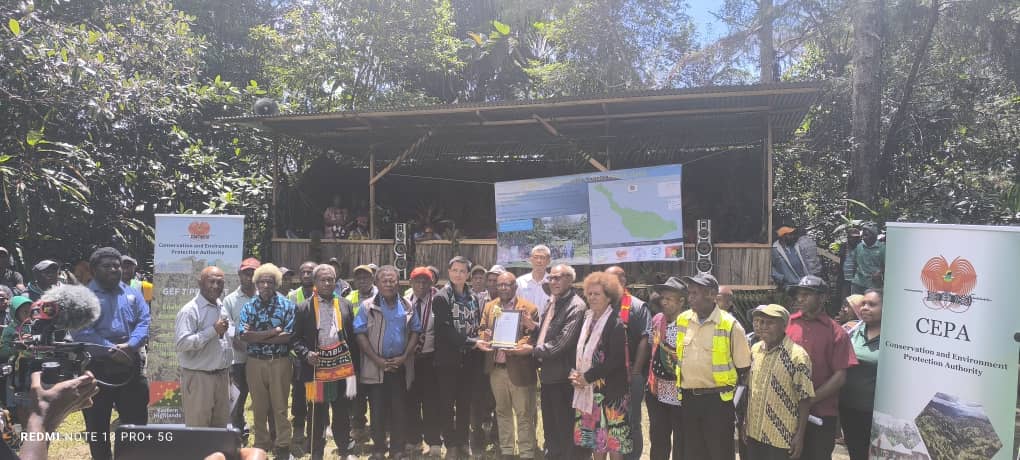
The pristine primary rainforest of the Hogave Community Conservation Area (HCCA) relies on a delicate balance of indigenous guardianship and global partnerships. Located in the Lufa District of the Eastern Highlands Province in Papua New Guinea, the Hogave Conservation Centre (HCC) has proudly spearheaded a locally led initiative to preserve its ancestral forests, flora, and fauna for over 39 years. Officially declared a Community Conservation Area on June 9, 2005, and recently registered nationally as a Protected Area, HCC represents a lifetime of conservation success.
Every single member of the Hogave community—men, women, and children alike—acts as a vital custodian of this landscape. However, transitioning from volunteer vigilance to a structured, sustainable protection model required funding support.
1. The Evolution of the Forest Rangers
Foundations of Indigenous Guardianship
From the project’s inception in 1987, forest protection was managed strictly on an ad hoc basis. Safeguarding the ecosystem relied entirely on passionate community members who volunteered their time to ward off poachers and protect biodiversity hotspots.
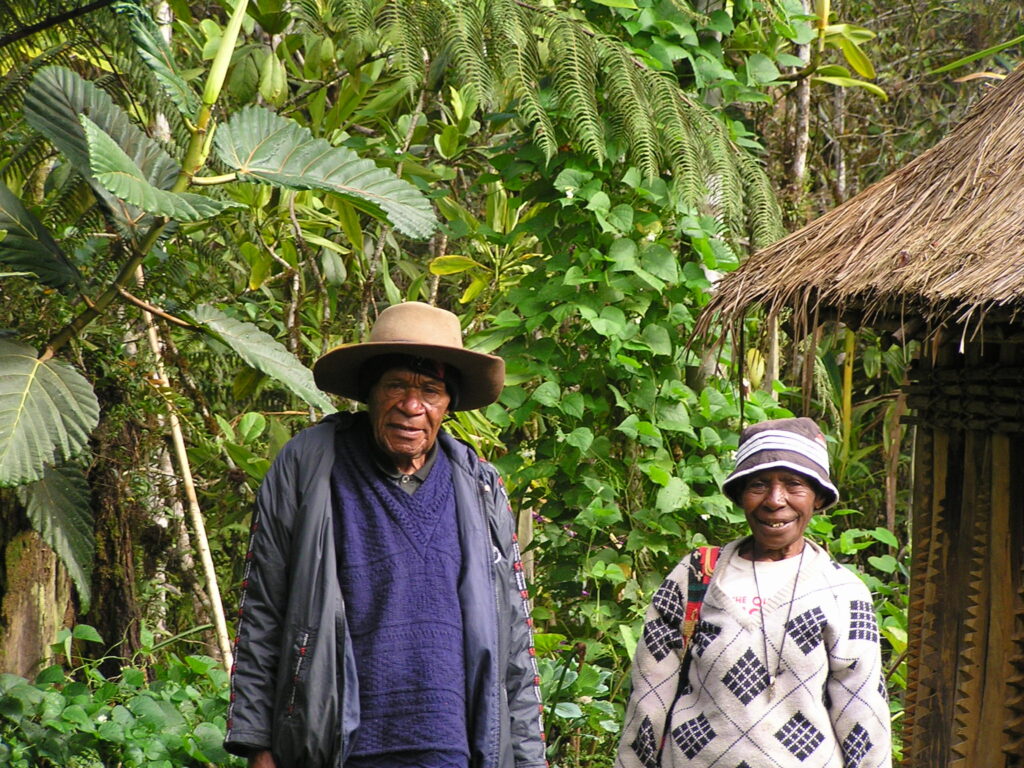
Among these original defenders, two standout figures anchor the community’s conservation lineage: Chief Kima Mulefa and Matriarch Sivarau Kima, affectionately known throughout the tribe as Grandpa and Grandma. Alongside a dedicated group of community elders, they spearheaded initial boundary patrols, laying the groundwork for what would become an official ranger program.
The Modern Ranger Corps
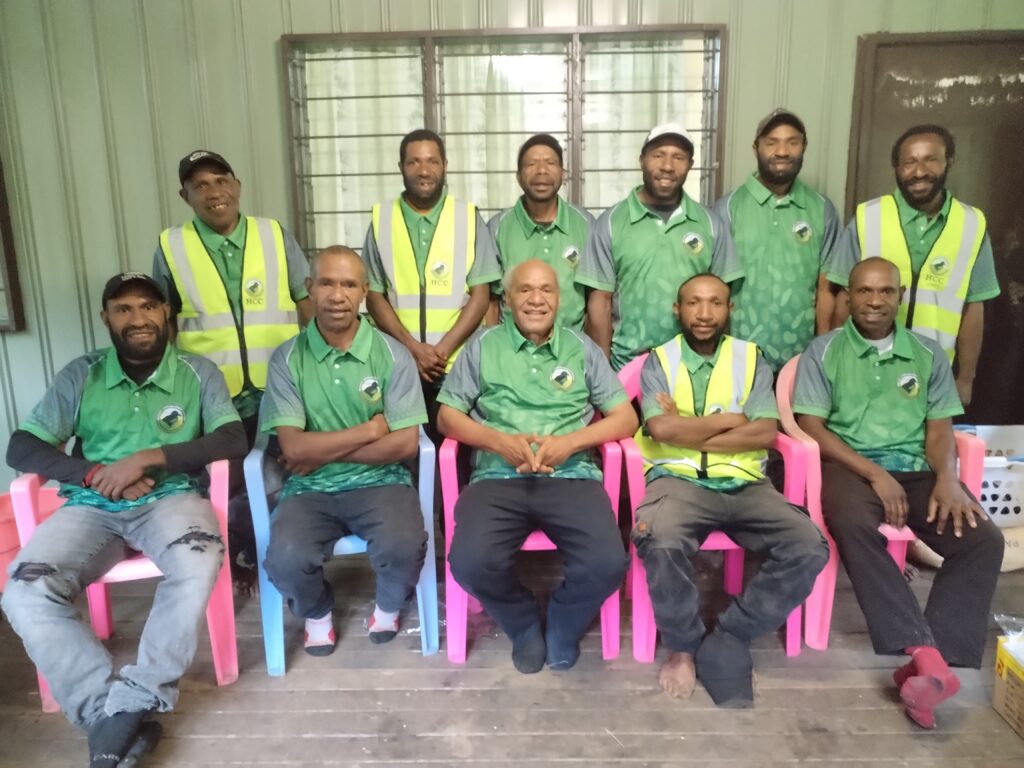
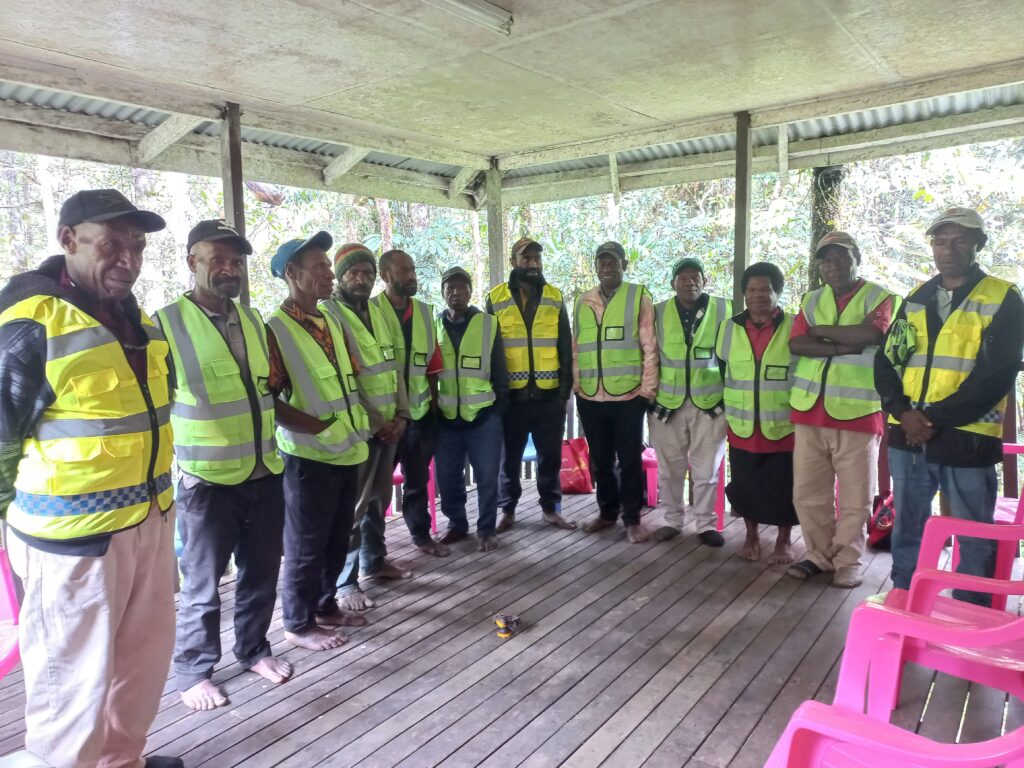
The formal introduction of Forest Rangers marks an official recognition of the guardianship roles practised since HCC’s inception. Thanks to newly acquired operational resources, HCC successfully transitioned to a semi-permanent staffing model.
The frontline team currently consists of 10 semi-permanent rangers and one coordinator who directs ground operations and provides daily oversight. These rangers are classified as semi-permanent because they receive structured financial compensation for their invaluable environmental protection work—a crucial milestone for local economic sustainability.
2. A Catalyst for Change: Rainforest Trust Partnership
The formal ranger program was made possible through a strategic partnership established with Rainforest Trust, a US-based non-profit environmental organization focused on purchasing and protecting threatened tropical lands to halt deforestation and mitigate climate change.
In 2024, Rainforest Trust awarded HCC a critical Feasibility Award. This grant serves as the financial backbone of current ground operations, allowing HCC to secure its boundaries and pay regular allowances to its core personnel.
Scope of the Rainforest Trust Grant:
- 10 Forest Rangers: Provided with consistent financial stipends for regular patrols.
- 1 Coordinator: Funded for daily field oversight and log management.
- 5 Technical Officers: Supported to ensure administrative, reporting, and policy objectives are met.
Globally, Rainforest Trust has helped protect more than 60 million acres of vital habitat across Latin America, Africa, and the Asia-Pacific region. By empowering local partners rather than managing land externally, their strategic grant approach directly secures indigenous land titles and fosters sustainable, community-backed governance.
3. Roles and Responsibilities of HCCA Rangers
According to the HCC Ranger Manual (2025):
“Rangers act as the frontline security guards of our ecosystem. Their primary duty is to prevent damage or harm to the forest, safeguarding all resident plant and animal species. Hogave Forest Rangers protect the wilderness, physical assets, and community projects of the HCC, ensuring operations run smoothly and conservation milestones are achieved.”
Rangers are legally mandated to enforce conservation rules, monitor forest boundaries, and conduct community educational outreach to reinforce compliance among residents and outside visitors alike.
Prohibited Activities within the Protected Area
To protect ecosystem integrity, it is a strict offense to conduct any of the following activities within the HCCA boundaries without prior, explicit authorization from HCC Management:
- Agricultural Encroachment: Any unauthorized farming, gardening, or agricultural expansion.
- Illegal Settlement: Building residential dwellings or unlawfully occupying protected land.
- Unregulated Fires: Lighting or causing open fires outside of strictly designated zones.
- Environmental Pollution: Littering, dumping, or releasing chemical waste, sewage, and refuse.
- Invasive Species & Livestock: Introducing grazing livestock or breeding non-native flora and fauna.
- Commercial Signage: Erecting or displaying unauthorized billboards, advertisements, or promotional materials.
- Deforestation: Cutting, destroying, or removing any plant or tree species.
- Resource Extraction: Excavating or removing sand, soil, stone, or gravel.
- Poaching: Hunting, trapping, killing, or slaughtering wildlife.
- Domestic Animal Damage: Allowing domestic dogs to hunt or disturb native wildlife.
- Cultural Vandalism: Defacing or destroying monuments of biocultural significance.
- Artefact Removal: Trafficking or possessing sacred objects and cultural artefacts.
- Scientific Theft: Removing fossils, archaeological remains, or paleontological specimens.
- Exotic Propagation: Sowing or introducing known invasive or exotic species.
- Hydrological Alteration: Changing or obstructing the natural flow of rivers and streams.
- Heavy Machinery Use: Operating vehicles, bulldozers, or machinery that exceeds dimensions specified by management.
- Unauthorized Assemblies: Organizing or participating in unauthorized public demonstrations or meetings within the protected zone.
- Interference: Wilfully obstructing a HCCA Forest Ranger in the execution of his or her official duties.
4. Conservation Area Mapping and Zonation
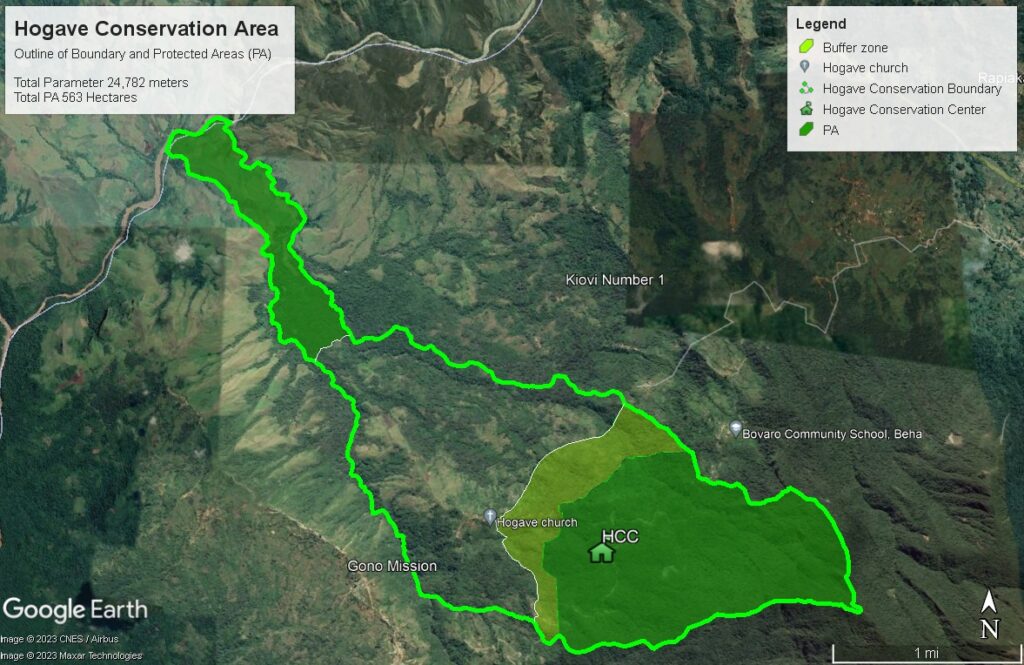
To ensure systematic monitoring, the total land area of Hogave is divided into strategic management zones, covering a total of 1,229.9 hectares. Rangers regularly patrol these zones to confirm that no restricted activity takes place within the core habitats.
Land Use and Zonation Breakdown
| Management Zone | Approximate Area | Conservation Objective |
| Core Conservation Area | 563 Hectares | High-density primary forest; strict biodiversity preservation. |
| Buffer Zone | 127 Hectares | Soft-use zone separating primary forests from village garden areas. |
| Settlement & Agricultural Zone | 540 Hectares | Designated space for community dwellings and sustainable local gardening. |
| Lowland Restoration Zone | 171 Hectares | Savannah grasslands targeted for massive tree-replanting initiatives. Habitat for Raggiana Bird of Paradise, Echidnas, and Cuscuses. |
5. Standard Conditions of Ranger Employment
To maintain community equity, operational agility, and high standards of governance, the HCC Management operates the ranger program under a clear set of constitutional guidelines:
- Rotational Terms: Rangers hold their active positions for a predetermined timeframe. At the end of a set period, personnel are systematically rotated as decided by HCC Management. This allows other eligible members of the community the privilege and economic opportunity to participate in ranger work.
- Residency Requirement: All active rangers must reside locally within Hogave. If a ranger relocates or moves away from the community for a prolonged period, they will be replaced to ensure rapid-response capability.
- Grievance and Dispute Resolution: Any professional grievances must be formal brought directly to the HCC Management. Rangers are expected to remain deeply respectful of the management committee, its processes, and final organizational decisions.
- Manual Compliance: Every ranger must demonstrate a comprehensive familiarity with the conservation bylaws and field parameters outlined in the HCCA Forest Ranger Manual.
Through the dedication of our indigenous team and the critical financial partnership of Rainforest Trust, the Hogave Community Conservation Area stands secure—preserving the invaluable biodiversity of Papua New Guinea’s highlands for generations to come.
By David Kima
Director Hogave Conservation Centre Inc.