After 38 Years, National Official Recognition of Protected Area Status in Hogave Forest Conservation
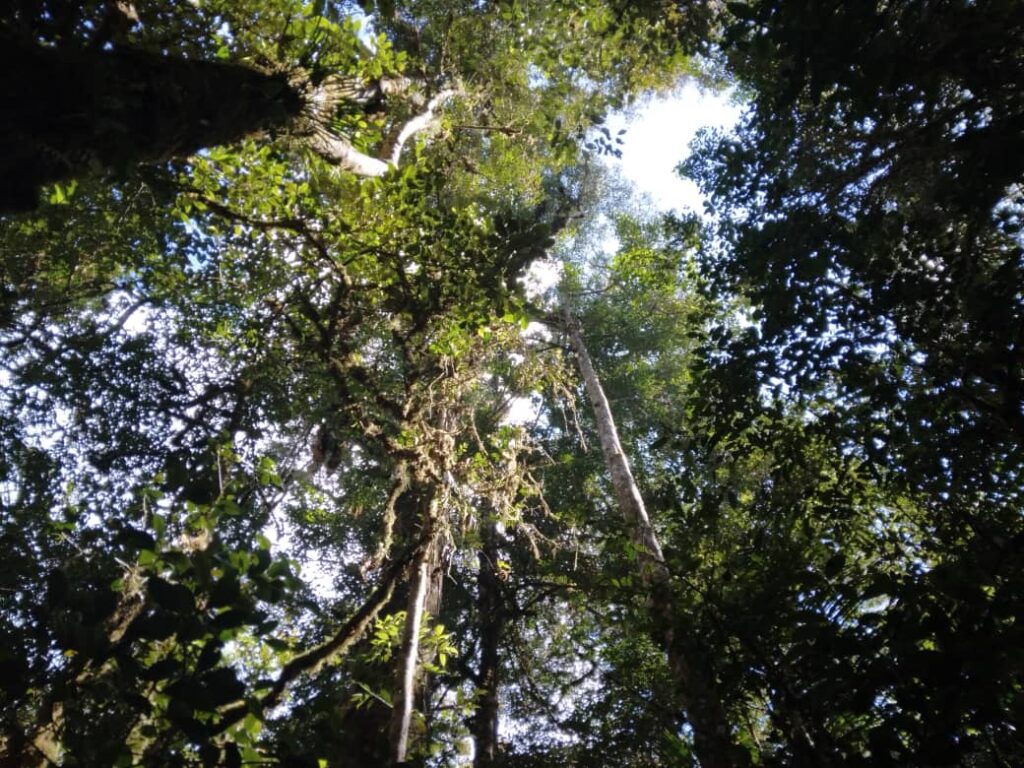
The scenic remote highland village of Hogave is surrounded by pristine rainforest vegetation and is located 63 kilometers (three hours’ drive) out of Goroka Town in Lufa District. It is situated at the south west foothills of Mt Michael (Aumoi) which is the highest mountain in E.H.P and the fifth highest mount in PNG at 3637 meters. The public road that runs through the forest, to the vast population beyond, serves as a boundary for the pristine high altitude forest which hosts the magnificent Lowes Parotia (Kiaga), the McGregor’s Bower Bird (Ose) and 11 other birds of paradise. About 3 kilometres vertically below the forest edge perches Hogave village. Further down beyond the village, is the gardening area and beyond that where the climate is hot, there is an extended forest area beside the intense Tua river (where it meets the Whagi). There resides the Raggiana Bird of Paradise, short beaked Echidna, Cuscus and countless intriguing creatures. The forest itself boasts many tree and plant species. Hogave village or tribe is made up of the Laivolo, Mula and Kevoma clans comprising of village elders, men, women, children and youth. The Hogave people are rich in culture and heritage and are proud custodians of the Hogave forest.
David Kima, the founding Director from Hogave, founded the Conservation Project in 1987. Motivated on Biblical Principles as well as the intrinsic love of nature instilled from childhood, he encouraged his extended family members, elders and village to embrace these ideas and work towards conserving their portion of the pristine forest surrounding the towering Mt. Michael. David Kima took initiative to educate the people of Hogave to conserve their forest and its wildlife. It took the people quite a while to understand the value of conservation and after much awareness and education the people finally gave consent to conserve their primary forest. The people were versed on the benefits of conservation such as having clean air to breathe, uncontaminated fresh drinking water, land stability, and protecting the nature and wildlife for future generations to enjoy.
At that time, there was a mining company going through the area which identified almost all the rivers and creeks in the area as positively deposited with mineral resources. In a competing world of interests, it took a couple of years, prolonged awareness and consultation and finally the people realized the importance of conservation. Thus, despite potential for logging and mining exploration, the people opted for conservation. The other key reason for initiating conservation was the steady encroachment on the forest and its water resources by the expanding human settlement.
A Memorandum of Agreement was signed in 1990 by Grand Chief Kima Mulefa together with other wise landowning tribal elders including Yame Kaliku, and Wagi Osilo. Thus the decision was made by the local indigenous community to conserve the pristine forest declaring their portion of primary forest surrounding Mt. Michael as a ‘Conservation Area’. Later on the conservation initiative was registered under the PNG Investment Promotion Authority in 2006.
Hogavians then adopted practices such as cutting trees selectively and sparingly, gardening only in secondary growth areas, and prohibiting the hunting of forest creatures. Later on they also took on reforestation – planting hundreds of trees in secondary growth areas. They caution others from destroying or littering the natural environment and collect fines for breaches. Some of these practices were traditionally practiced and known among the community, now it was formalized – such as, selective harvesting of mature trees and protecting the drinking water source from contamination. In 1989, in a biological survey done by the then Department of Environment and Conservation in the Hogave Conservation Area 32, bird species were recorded.
The late Grand Chief Kima Mulefa in an interview with a national TV station clearly articulated the basis of environmental conservation which was practiced by many generations long before Europeans arrived and that is, ‘We exist because the forest exists and the forest exists because we exist.’ With the endorsement and support of the government in the official declaration of national protected area status, the people of Hogave will continue to enjoy their forest and benefits that follow.
Over the duration of the 38 years that the Hogave Community (2500 current est. pop) adopted a policy of conservation, hundreds of visitors – both local and international have visited and enjoyed the Hogave Conservation Area. These include researchers and scientists, the first being Roland & Heidi Stein who were Ethno Ecologists from Wau Ecology Institute in 1987 who advised that the conservation initiative be nationally registered as a protected area. Other visitors include community development project partners, government officials, University of Goroka students, high altitude trainees, missionaries, filmmakers, wildlife photographers, and professionals of various fields.
Apart from eco-system benefits, the conservation initiative brought livelihood benefits to the Hogave villagers including women, youth and children. A comfortable guesthouse was built within the conservation area especially to encourage research and host project partners. Hogavians benefited from a water supply system 4.5 kilometers from the water source to the village. It gives clean fresh cold water throughout the length of the village of 1500 which greatly assists in everyday living. Other projects flowing from the initiative include publication of a handbook on Christians caring for the environment, donations to the elementary school, health education and the reviving of traditional salt making. A recent community development project funded by Digicel Foundation PNG was the solar panel installation in the nearby primary school. This school serves hundreds of students in the rural community. The biggest rural development project so far was the completion of a mini-hydroelectric power plant constructed to encourage Hogavians to live in permanent dwellings and improve their standard of living while decreasing rural-urban drift. The mini-hydro which produced 20 kwatts of electricity was unfortunately destroyed 3 years later after a major landslide and flooding. The mini-hydroelectric plant was graciously funded by Hans Wilsdorf Foundation in Geneva, Switzerland. A major development in 2023 was the launching of the Hogave Conservation website which contains valuable information about the local initiative and promotes the conservation efforts to a wider national and global audience.
The Conservation Initiative was not all smooth running as there were many challenges faced throughout the 38 years. These include natural disaster damaging projects, very poor and rugged road conditions, lack of funding support for years at a time, challenging weather conditions, office space & rental issues, no proper support staff, disgruntled community members, poaching, and the neglect of the government on environment conservation.
Through the resilient leadership of the Director and support of community members, the conservation initiative was able to continue on successfully for 38 years despite challenges. Over the years, the project partners that HCC are grateful for are Missionaries, Evangelical Alliance of PNG, World Bank, Institute of Biological Research then headed by Scientist Enoch Kale, Hans Wilsdorf Foundation, Cross-Hands Australia, Christiansen Fund USA, NHK Studios Japan, Silverback Studios UK, PNG Biodiversity Conservation Rainforest Trust, and recently Digicel Foundation PNG.
More work is needed to further establish the conservation initiative and fulfill its Mission and Vision and in recent years (from 2023) the Conservation and Environment Protection Authority (CEPA) and Food & Agriculture Organisation (FAO) has immensely assisted Hogave Conservation to become a nationally registered Protected Area designated as Hogave Community Conservation Area. The community consultation processes and feasibility studies were funded by Rainforest Trust. Through tireless efforts of CEPA and FAO Officials and Hogave Conservation Centre Staff, and the Free Informed and Prior Consent given by the Hogave Community, Hogave Conservation Area was nationally gazetted as a Community Conservation Area on the 9th of June 2025. This document gives the government access to the forest owning community to partner with them to conserve their forest. This declaration marked a pivotal moment for the local conservation initiative in that it places HCC in a better position to achieve its vision and goals.
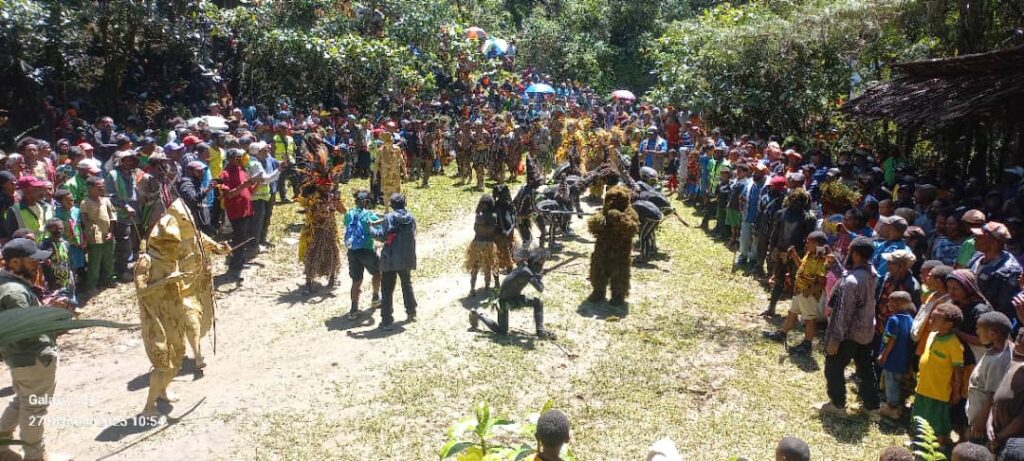
This gazettal notice was officially and publicly presented to the Hogave Conservation Centre by Mr. Motsy David, First Secretary to the Minister of Conservation and Environment Hon Simo Kilepa, on the 27th of October 2025 in front of hundreds of people from surrounding communities and visitors from far. Present to witness and endorse the declaration were top officials from CEPA, FAO, Scientists, Provincial Government Representatives and Local Level Government Representatives, Community Leaders, HCC Board Members and Staff.
The mission of Hogave Conservation is – Conserving the primary forest for present and future generations whilst achieving community development. The milestone of achieving protected area status is to continue to ensure that the two above targets are achieved – that the basic livelihood needs of the remote community are met, and their natural environment is preserved for present and future generations.
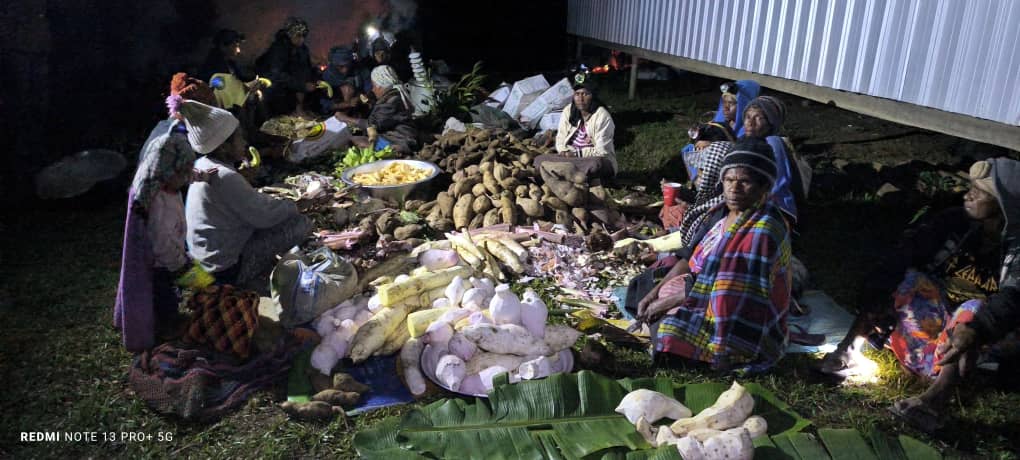
On the 27th of October 2025 at the remote conservation site in the forest, the official declaration festivities included congratulatory remarks from distinguished guests, ‘singing’ (traditional song and dance) groups from surrounding communities and delicious ‘mumu’ (earth oven) feasts marking the day.
Hogave Conservation Center welcomes project partners who believe in its mission and goals. Hogave Conservation Centre is currently open to researchers to conduct studies in the forest and wildlife film – makers upon contact with the Director.
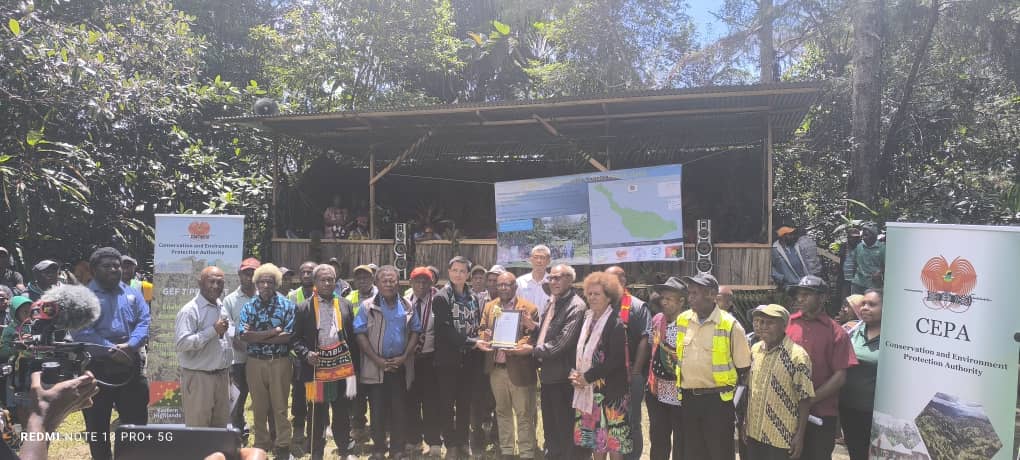
From Center to Right: David Kima (HCC Founding Director) with Wife – Dorothy, other HCC Officials